
Straight answers
Should I Buy a 20-Foot or 40-Foot Shipping Container?
The right container size depends on how much you need to store, how much space you have on site, and what delivery access looks like at your location. A 40-foot container holds roughly twice the length of a 20-foot unit, but price, delivery clearance and local inventory can change which option is actually the better buy.
Key points
- As a rough real-world comparison, a 20-foot container provides storage space similar to a small single-car garage, while a 40-foot container is closer to a small two-car garage.
- A 40-foot container offers substantially more storage length than a 20-foot container—but only if your site can accept the larger delivery footprint.
- Used 40-foot containers can sometimes be surprisingly close in price to 20-foot containers because 40-foot equipment is more prevalent in freight circulation.
- Delivery access typically needs about 75 linear feet for a 20-foot container and about 120 linear feet for a 40-foot container.
- Compare current options for your ZIP rather than assuming the longer box always costs proportionally more.
- If height matters, a 40-foot high cube adds vertical space without changing the delivery-length requirement of a standard 40-foot unit.
Start with capacity—not assumptions about price
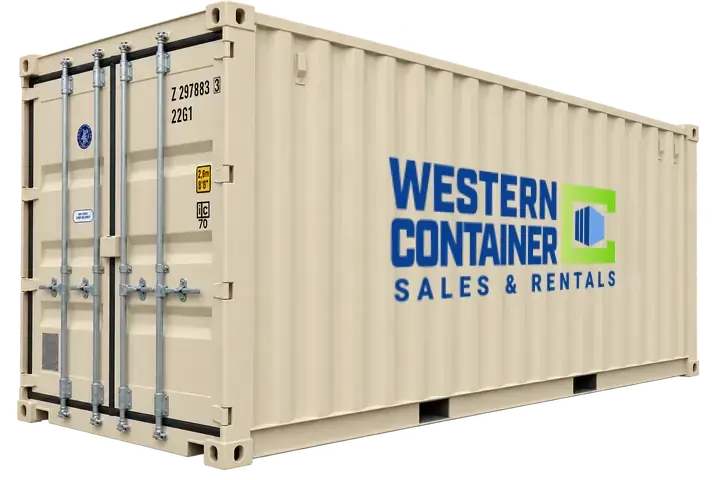
A standard 20-foot shipping container is roughly 20 feet long by 8 feet wide and about 8.5 feet tall. A standard 40-foot container keeps the same width and height but roughly doubles the length. If you already know you need the larger volume, a 40-foot unit is the straightforward choice. If your storage need is modest, a 20-foot container often leaves less unused space on the pad and can be easier to place on a tighter site. Remember: 20' ≈ small single-car garage 40' ≈ small two-car garage
When a 20-foot container is the better fit
Choose a 20-foot container when the inventory, tools or materials you need to protect fit comfortably in a shorter box, or when approach paths and drop space are limited. Many residential, small-business and job-site uses do not require a full 40 feet of length. Buying only the capacity you will use avoids paying for empty volume and can simplify delivery planning.
When a 40-foot container is the better fit
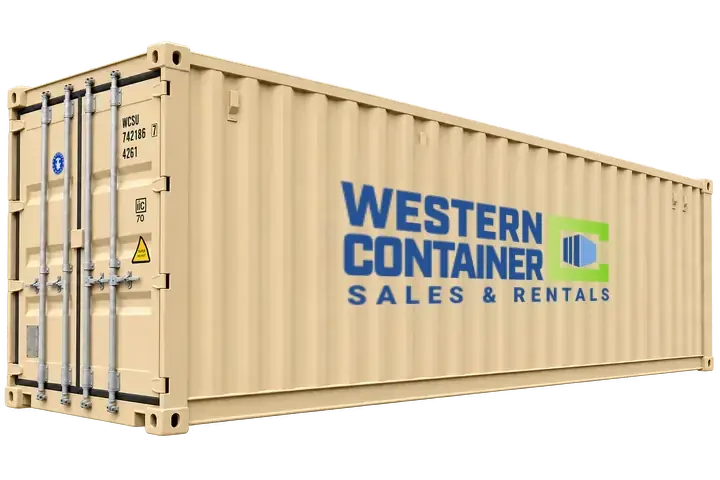
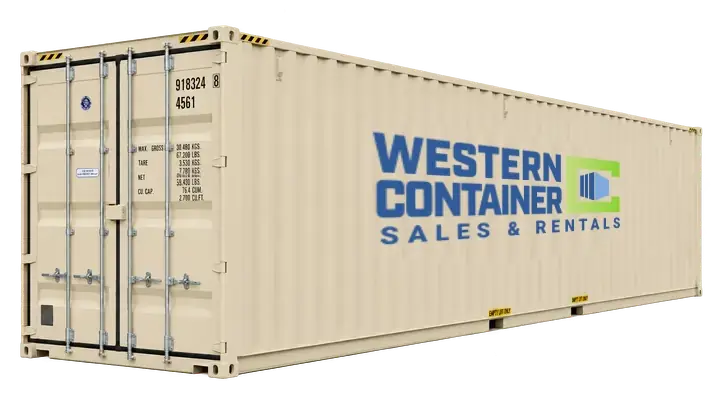
Choose a 40-foot container when you need more continuous floor length—bulk materials, longer equipment, seasonal retail overflow, or multi-crew construction storage. Forty-foot equipment is extremely common in international freight, so local markets often stock more 40-foot options than buyers expect. That availability is part of why a larger box can still be the practical choice even when a 20-foot unit might seem “enough” on paper.
Price does not always rise with container length
A larger shipping container does not necessarily cost proportionally more than a smaller one. Container pricing is influenced by equipment supply as well as physical size. Because 40-foot equipment is more prevalent in freight circulation, local inventory can sometimes make a used 40-foot container surprisingly close in price to a 20-foot container. That is why customers should compare current options for their ZIP instead of assuming price increases directly with length. Because container prices vary by location and inventory, compare current options for your ZIP rather than relying on generic national price ranges.
Delivery space is often the deciding factor
Even when capacity and price favor a 40-foot container, delivery access can rule it out. Western Container Sales (Western Container Sales) typically recommends approximately 75 linear feet of delivery space for a 20-foot container and approximately 120 linear feet for a 40-foot container. If your site cannot provide the longer approach, a 20-foot container may be the only workable option—regardless of how attractive a 40-foot price looks. See the Delivery guide for access, clearance and placement considerations.
Site space after the truck leaves
Delivery length and permanent footprint are related but not identical. After drop-off, a 40-foot container occupies roughly twice the length of a 20-foot container on the ground. Confirm the permanent placement area can accept the box without blocking doors, drives, gates or drainage. A size that delivers successfully still needs a lasting home on the site.
Where a 40-foot high cube fits the decision
If you need more height rather than more length, a 40-foot high cube adds vertical clearance compared with a standard 40-foot unit. Delivery-length expectations remain in the same 40-foot class—about 120 linear feet—so the high cube does not solve a tight approach path. Use the product guides for dimensions and typical uses; use your ZIP comparison for current local pricing.
Bottom line
Buy the container that matches your storage need and the space you can actually deliver into. A 20-foot unit is often enough for compact storage and constrained sites. A 40-foot unit is the better value when you need the length—and local supply can make its price closer to a 20-foot option than many buyers expect. Compare delivered options for your ZIP before deciding. See the Product Guides for detailed dimensions and specifications, and the Delivery Guide for access, clearance and placement requirements.